
Emerging Leaders
The CDA Institute Fellowship Programme brings together a diverse, multi-generational community of experts and practitioners committed to strengthening informed dialogue on Canada’s national defence and security.
CDA Institute Fellows are active members of the Institute’s community and ambassadors for its mission. Fellows contribute to the Institute’s research and programming, participate in events and public discussions, and engage with their professional networks to help broaden the national conversation on defence and security.
Together, our Fellows strengthen the Institute’s capacity to foster rigorous analysis, constructive debate, and informed discussion, and help build a stronger national community of defence and security expertise.
Our Emerging Leaders represent one part of a broader intellectual community. Explore our Senior Fellows and Fellows to discover the full range of scholars, practitioners, and emerging thinkers contributing to our work.
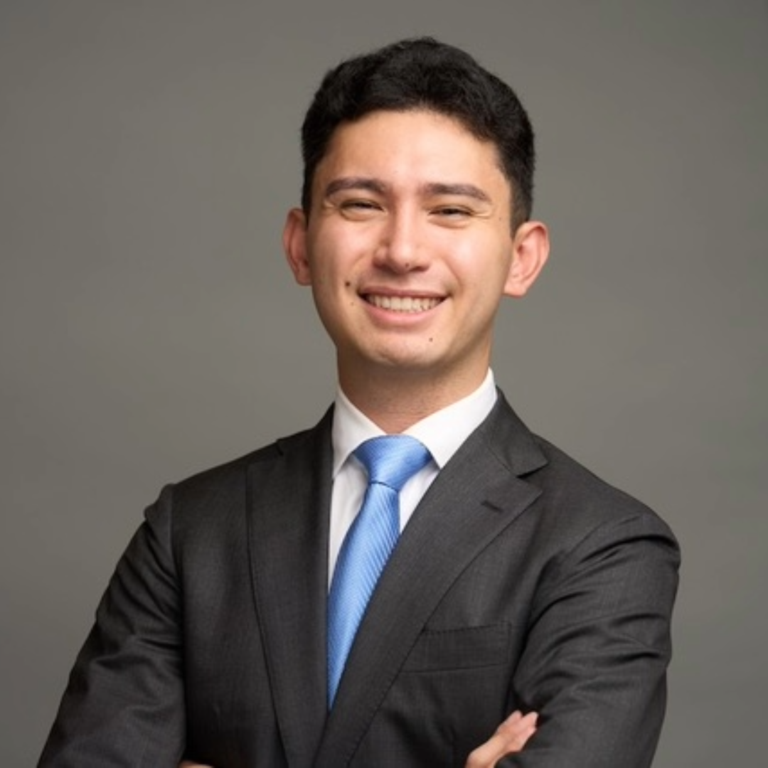
Xavier Delgado
J.D. candidate at Columbia Law School
Xavier Delgado is a Canadian-born J.D. candidate at Columbia Law School, where he serves as a Staff Editor for the American Review of International Arbitration and is a member of the Society of International Law and the National Security Law Society.
Before Columbia, Mr. Delgado was Senior Program Associate at the Wilson Center’s Canada Institute, where he served as Research Director for the Washington Forum on the Canadian Economy and staff lead for the Canada-U.S. Legal Issues Symposium. His commentary on Canada-U.S. relations, Canada’s Indo-Pacific strategy, and North American geopolitics has appeared in major media outlets, including The Globe and Mail, CBC, CNN, BBC, and NPR. He is also a member of the Oxford Analytica contributor network.
Mr. Delgado graduated from Georgetown University’s Walsh School of Foreign Service with a B.S. in Foreign Service, majoring in International Politics and earning a Certificate in International Business Diplomacy. He also holds a Certificate in International Economics from the Johns Hopkins University School of Advanced International Studies (SAIS).

Emmylou Sergent
Director of Strategic Accompaniment, ADIT North America
Emmylou Sergent is the Director of Strategic Accompaniment at ADIT North America, a firm specializing in strategic intelligence and business diplomacy. Her work spans market intelligence, partnership identification, strategic networking, due diligence, and security-focused analysis, helping clients navigate complex markets and reduce uncertainty in their global projects.
She previously served as Events Coordinator at the Conference of Defence Associations (CDA) Institute in Ottawa, where she organized national defence conferences and led the National Security and Defence Dialogues. She completed an internship at the French National Assembly in Paris, within the cooperation and bilateral affairs branch, where she drafted policy briefs on foreign policy issues and supported the parliamentary diplomacy that underpins France’s relationships with Canada and Québec.
She holds a Master’s degree in International Relations from the University of Montréal, with a specialization in Culture, Conflict and Peace. Her thesis examined France’s diplomatic presence and Indo-Pacific strategy in the region. She is also a member of the Strategic Analysis Network, an analyst in the Young Researchers Program of the Institute for Applied Geopolitical Studies (IEGA) in Paris and an alumna of the France-Canada Future Leaders Program.

Sasha Mathieu
Master’s student in Strategic Studies at the University of Calgary’s Centre for Military, Security and Strategic Studies
Sasha Mathieu is a Master’s student in Strategic Studies at the University of Calgary’s Centre for Military, Security and Strategic Studies. Her research focuses on critical undersea infrastructure, Arctic security, and transatlantic defence cooperation. She has held policy and analytical roles across the Government of Canada and currently serves as a Junior Fellow with Arctic360, where she supports communications and social media initiatives.
Her graduate research examines Canada’s preparedness to protect critical undersea infrastructure, particularly in the Arctic, with a focus on the policy, governance, and operational challenges associated with strengthening national resilience. Prior to moving to Calgary, Sasha graduated at the top of her class as co-Valedictorian from the University of Ottawa, where she earned an Honours Bachelor’s degree in International Studies and Modern Languages.

Dr. Philip Jones
Program Manager, Toronto Centre
Philip Jones is a Program Manager at Toronto Centre, where he leads initiatives that strengthen financial‑sector regulation, capital‑market development, and institutional capacity in emerging and frontier markets. His work focuses on coordinating complex multi‑stakeholder programs, advancing regulatory engagement, and designing development interventions that reinforce financial stability, market integrity, and economic security.
Philip previously served at Global Affairs Canada, working at the intersection of economic security, critical minerals, strategic infrastructure, and international economic corridor development. Through the G7 Partnership for Global Infrastructure and Investment, he contributed to Canada’s engagement across Africa, Latin America, and the Indo‑Pacific, analyzing how governance systems, regulatory institutions, and geopolitical competition shape investment environments and long‑term strategic outcomes.
He holds a PhD from Carleton University’s Norman Paterson School of International Affairs, where his research examined institutional economics, property rights, organised criminal governance, and violence. His work received funding from the International Development Research Centre (IDRC) and Mitacs‑CALAREO and included visiting researcher appointments in Brazil at PUC‑Rio and the Federal University of Rondônia. Philip has also served as a Don Lavoie Fellow in Economics at the Mercatus Center and holds an MSc from the London School of Economics and a BA from St. Francis Xavier University. He is currently completing an MBA at the University of Ottawa’s Telfer School of Management.

Wesley Nicol
PhD candidate at Carleton University’s Norman Paterson School of International Affairs
Wesley Nicol is a PhD candidate at Carleton University’s Norman Paterson School of International Affairs in Ottawa. His dissertation research examines geoeconomic competition and Chinese economic statecraft, with a focus on how middle power states manage the relationship between economic openness and national security interests in the critical minerals, critical infrastructure, and research security sectors. He has also published work on AUKUS, NATO and UN peacekeeping operations, and topics in the Canadian Armed Forces. Wesley’s professional experience is with the Department of National Defence. Wesley is currently a principal investigator for a Mobilizing Insights in Defence and Security (MINDS)-funded project awarded by the Department of National Defence on critical minerals, and a visiting fellow at the Coral Bell School of Asia Pacific Affairs at the Australian National University in Canberra.
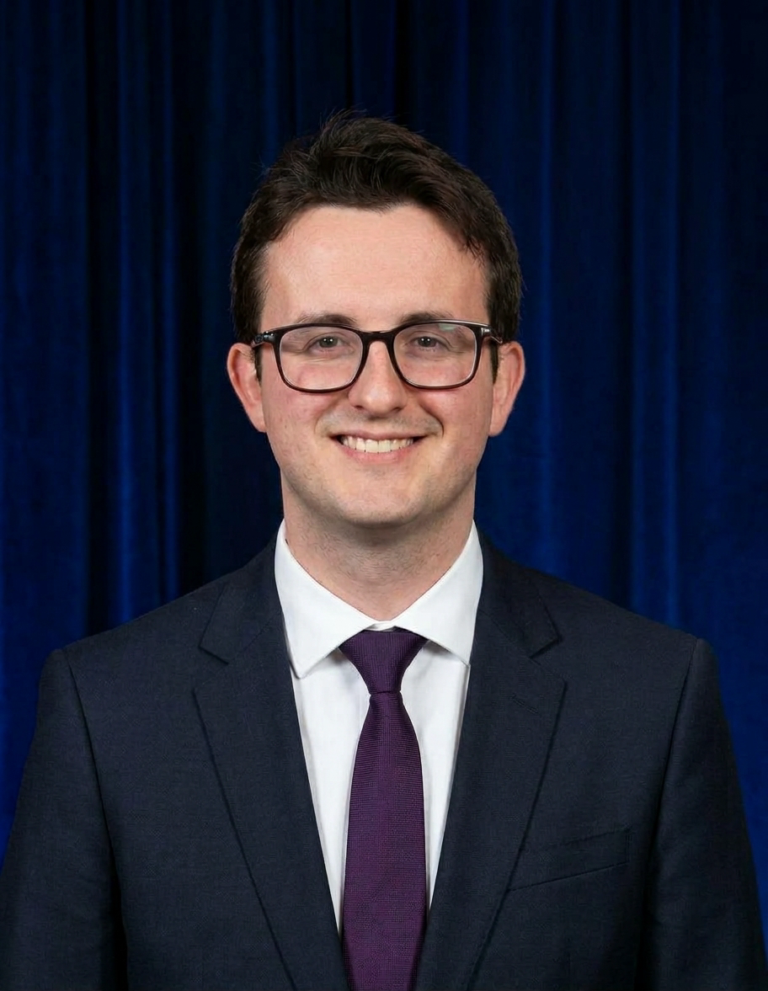
Jacob Tuckey
Practitioner, Strategic Analysis Network
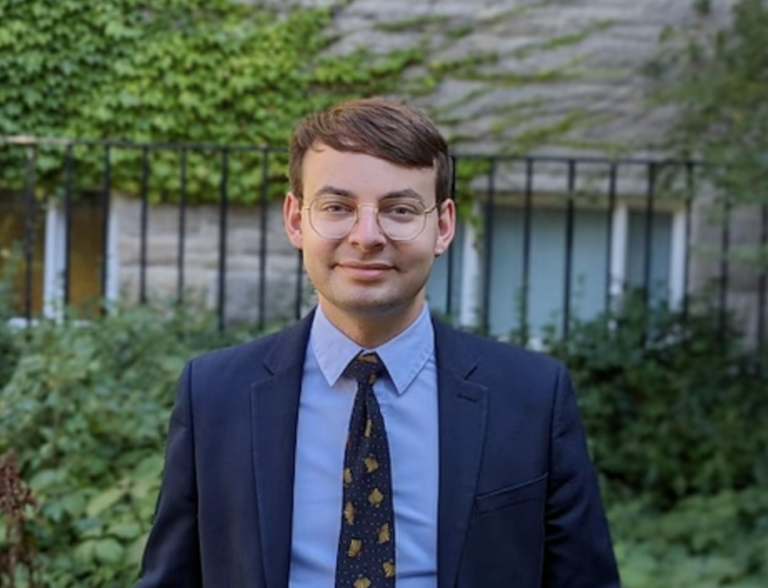
Émile Lambert-Deslandes
CITADELLE Network Manager, CDA Institute
Émile is the CITADELLE Network Manager at the CDA Institute and a final year doctoral candidate in the Department of Political Studies at Queen’s University. His dissertation investigates historical cases of nuclear weapons proliferations and non-proliferations, focusing on Canada, West Germany, and France. His research has been awarded the MINDS/SSHRC doctoral and postdoctoral scholarships, the Desjardins Scholarship, the G.G. Baron Van der Feltz Award for best master’s dissertation in International Relations, and the Ontario Graduate Scholarship (OGS; twice). Émile’s research is primarily focused on NATO deterrence, nuclear weapons, and nuclear latency. Additionally, he works on Canadian foreign and defence policy.
Émile has authored or co-authored articles, book chapters, and book reviews that have been published in International Affairs, Defence Studies, the Journal of Strategic and Military Studies, and the Palgrave Handbook on Contemporary Geopolitics, among others, and regularly analyses international events on the radio. He is also a Graduate Research Fellow at the Centre for International and Defence Policy, and was previously Publications Manager for the Strategic Analysis Network.